
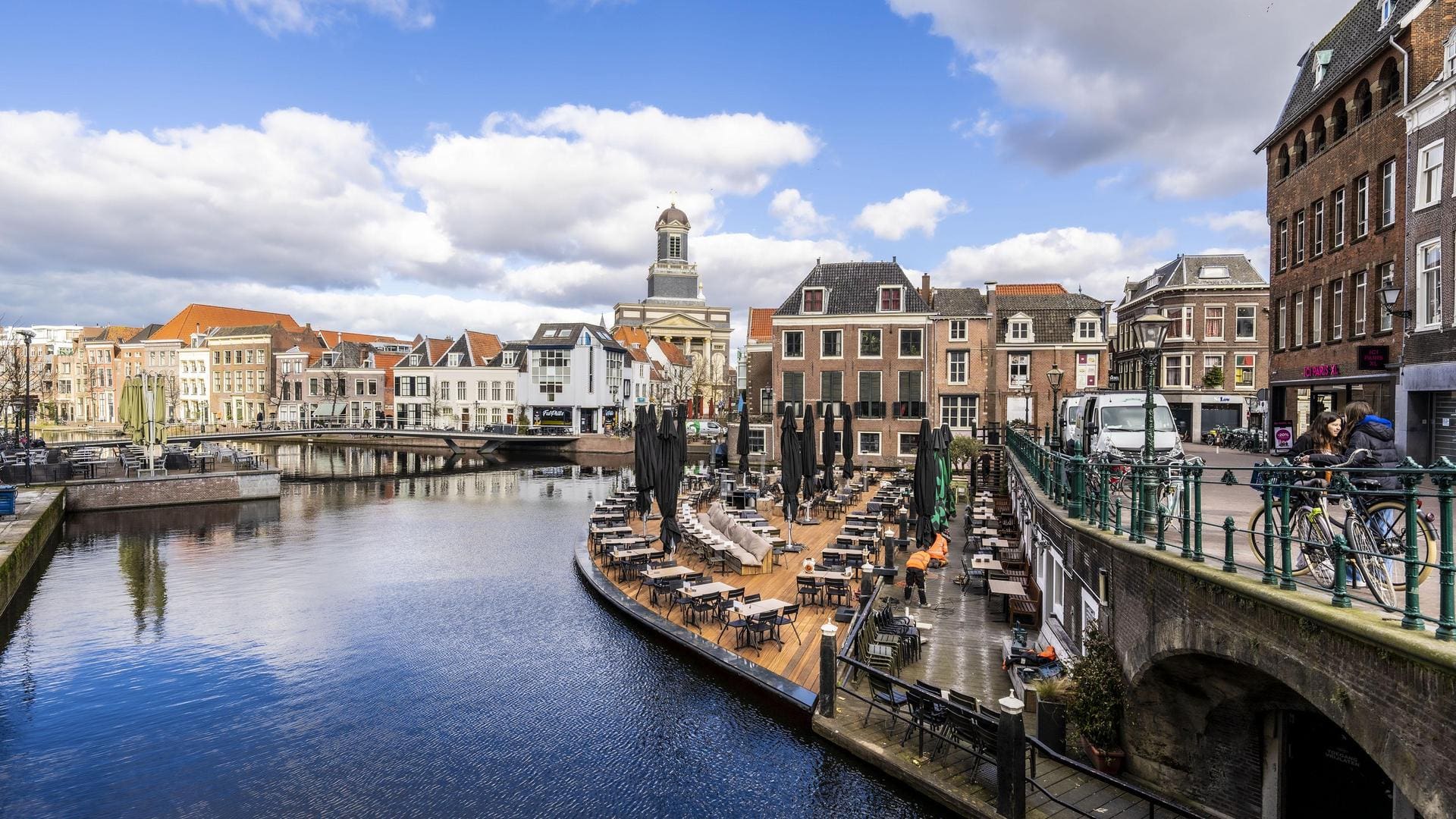
Leiden is the courtyard city of the Netherlands and even has the highest density of courtyards per square metre. Scattered throughout the historic city centre are no fewer than 35 monumental almshouses, often hidden behind inconspicuous gates and doors. It is precisely this hidden character that makes a walk through Leiden so special. With a guide, you discover the most beautiful spots and step into almshouses you would otherwise just walk past. These are the hidden courtyards of Leiden you absolutely should not miss during your visit to the city.
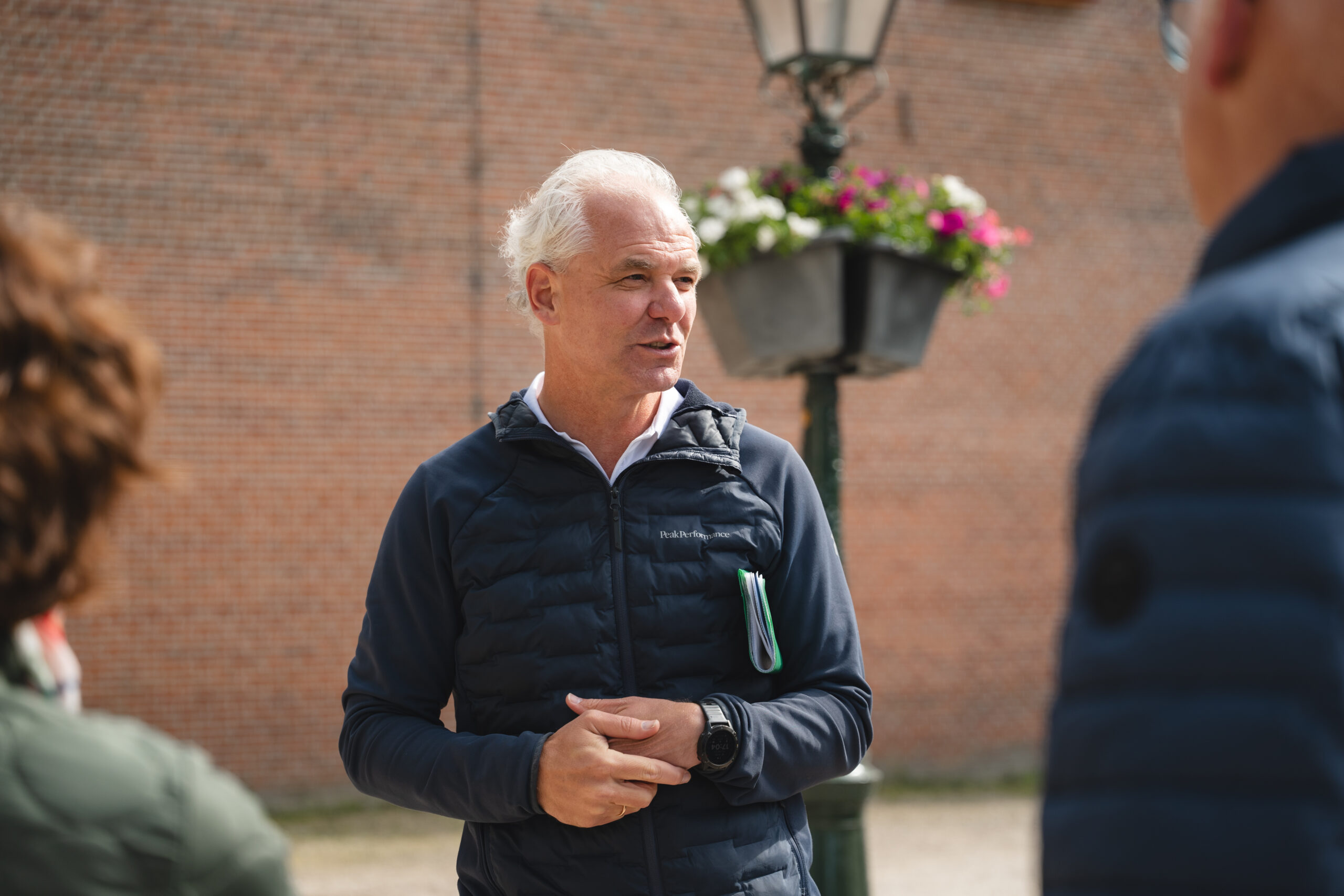
“I am Marcel, born and raised in Leiden. As a guide, I'm happy to show you the city that I think is the most beautiful in the Netherlands. Read my best tips below!”
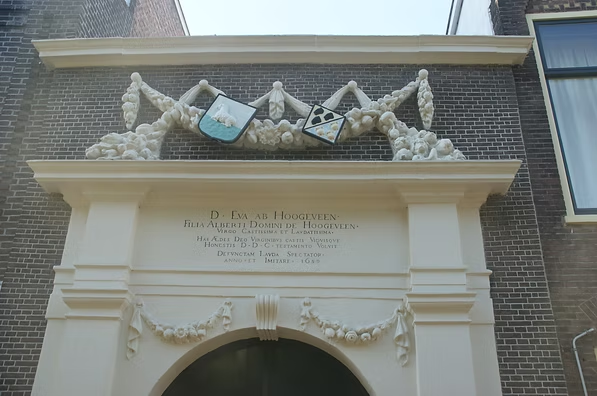
1. Eva van Hoogeveenhofje - A quiet pearl on the Haarlemmerstraat
On the lively Rapenburg you expect commotion, not silence. Yet via the Doelensteeg, you suddenly enter an oasis of calm: the Eva van Hoogeveen Hofje.
This symmetrical courtyard was founded in 1652 by Eva van Hoogeveen, widow of a wealthy merchant. In the middle of the serene courtyard stands the characteristic water pump with family crest as an eye-catcher. Small, charming and perfectly balanced.
The hofje is both a listed monument and open to the public. One of the most photogenic and peaceful spots in Leiden, but without a guide you'll walk right past it.
Discover hidden Leiden. We will show you the way.
2. Jean Pesijnhofje - Silence at the Pieterskerk
Right next to the imposing Pieterskerk is a place that many people pass by unnoticed: the Jean Pesijnhofje.
Founded in 1683 by Marie de Lannoy, widow of Jean Pesijn, a refugee from the Lille area. The hofje was built in the so-called ‘English Gate’ a name that refers to the time when a group of Pilgrim Fathers lived here before leaving for America.
Once intended for elderly members of the Walloon Reformed Church, and still run by regents.
Inside, you'll find an idyllic courtyard with climbing roses and a sun-drenched bench. One of Leiden's best-kept secrets, a perfect for a rest during a city walk through the historic Pieterskwartier.
Hidden gems? We'd love to show you those.
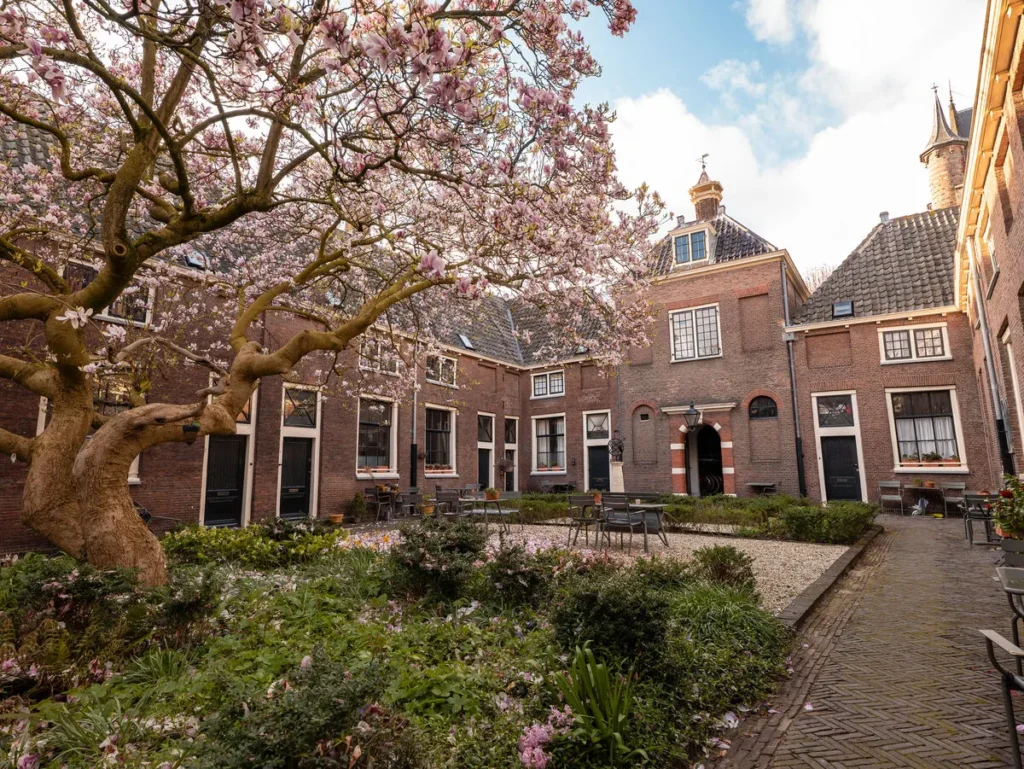
3. Brouchovenhofje - 17th-century class in the heart of Leiden
The Van Brouchovenhofje is one of the most beautiful hofjes in Leiden. This hofje was founded on the initiative of Anna van Brouchoven and accommodated 16 reformed elderly people. Family members of the founder had priority. Originally, the houses were one storey high; at the end of the 18th century, an additional storey was added.
The stately gatehouse from 1640 makes an immediate impression. Above the gate is the regent's room, where portraits of Van Brouchoven, his sister and his wife hung. Special detail: this is the first hofje where gate and regent's room together form a single representative whole, an example that was later followed throughout the Republic.
The harmoniously constructed facade with its richly decorated central section of Bentheimer sandstone was designed by Arent van ’s-Gravensande. And it shows: stately, stylish and typically Leiden grandeur.
This courtyard perfectly demonstrates how charity, architecture and status come together in the city centre of Leiden. Want to explore? Join Explore Leiden.
4. Groot Soinshof - Love, rules and leading charity
In the middle of Leiden city centre, hidden away in the Sionsteeg, lies the Groot Sionshof (also called Van Swietenhof). This special almshouse was founded in 1480 by Hugo van Zwieten and Luydgaert Claesdochter van Bosschuyzen. In terms of foundation, this makes it the second-oldest hofje in Leiden. And you can feel it: history is in the air here.
For couples - and with clear rules
The Sionshof was intended for 14 needy couples. Remarkably: it was not intended for single women. Did the husband die? Then the widow had to leave. Widowers could stay, but remarriage was not allowed. Charity with strict conditions, the whole of 15th-century Leiden in one hofje.
The solution for widows
A solution came in 1641. At the back of the hofje, on Schoolsteeg, Miss Emerentia van Brouchoven-Banning founded Klein Sionhof, also known as the Widows' Court. From then on, a distinction was made and the original hofje was named Groot Sionshof.
Two courtyards, one story. About care, rules and the social structures of the past.
During a walk with Explore Leiden, we will tell you not only what happened, but especially why. Because behind every court gate is a story.
5. Jean Michelhof - A courtyard with plenty of traditions
Right opposite the Lokhorst church at 10-12 Pieterskerkstraat is the Jean Michelhofje, founded in 1687 by Catharina Geschier, widow of Jan Michielsz. The cottages were intended for four couples and eight women (unmarried or widowed) who were members of the Walloon Reformed congregation, formed from the flow of Protestant refugees from the south. When bequeathed wealth allowed, residents received food, drink and other perks, and for many years there was a tradition that new residents had to treat their fellow residents to a feast, abolished in 1757 but reintroduced in 2018. Even the free beer was once exchanged for two pence beer money a week, because the liquor from the beer cellar tasted like nothing, a lovely Leiden detail that gives this hofje extra character.
6. Sint Anna Aalmoeshuis - Medieval tranquillity in the heart of Leiden
The Sint Anna Aalmoeshuis is one of the oldest hofjes in Leiden, dating back to 1492. You'll find this special hofje on Middelstegracht, while the original entrance on Hooigracht is inconspicuously hidden between the houses and no longer in use, once a long corridor led to the hofje. Today, if you step inside through the heavy wooden gate, you immediately find yourself in another time: a medieval atmosphere with a sober but powerful look. The Sint Anna Aalmoeshuis is among the 100 most beautiful hofjes in the Netherlands and is the only remaining hofje in Leiden with its own chapel. An absolute must during a walking tour of Leiden city centre.
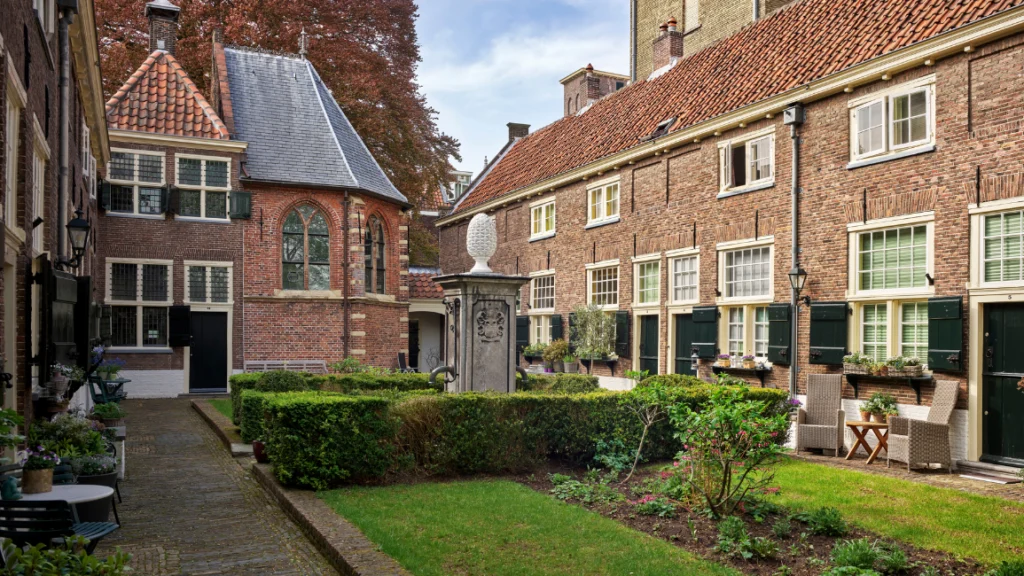
Discover Leiden through its almshouses? Book a guided city walk through Leiden. Leiden's hidden hofjes are not tourist highlights, they are silent witnesses to a rich history.


 EN
EN